
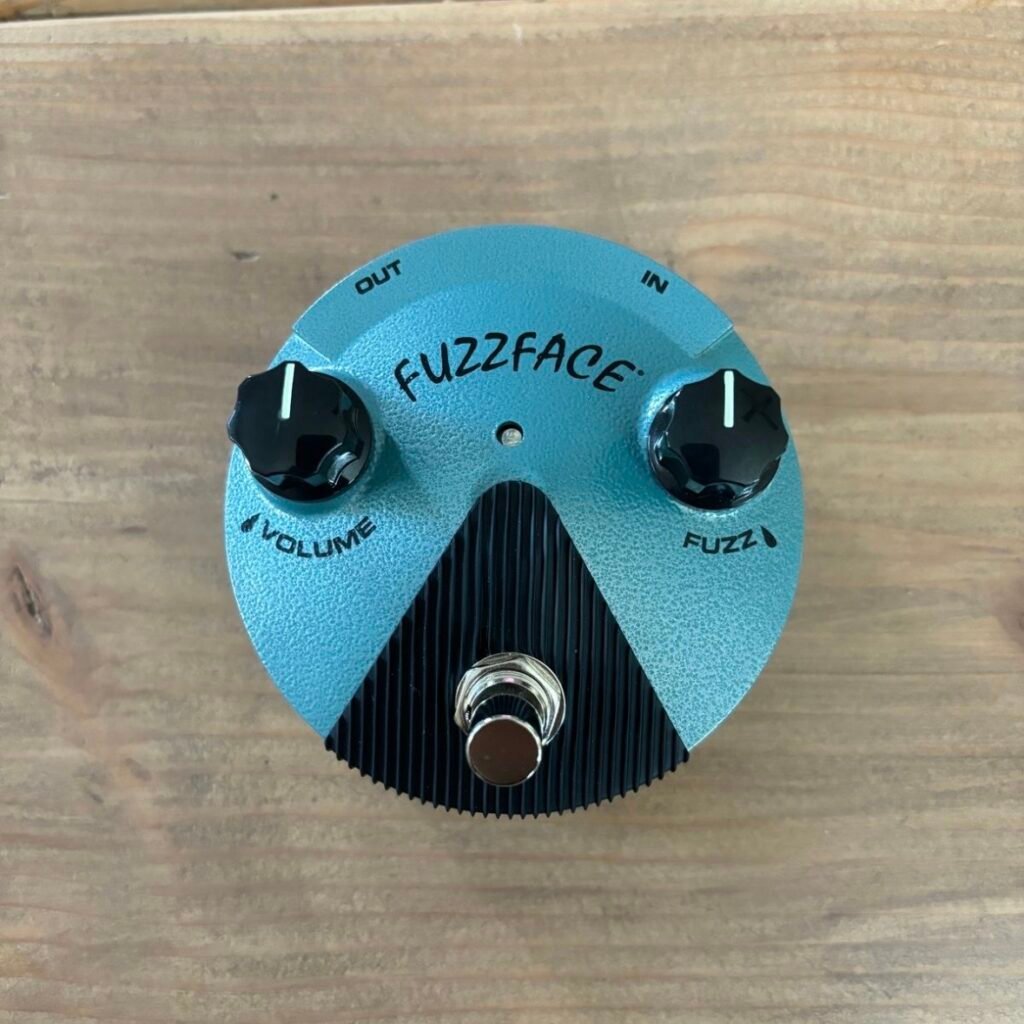
The Classic Studio Hendrix Sound –
If you’ve been chasing that soaring, legendary lead tone from Jimi’s studio records, you’ve probably spent some time looking at the Dunlop FFM3 Jimi Hendrix Fuzz Face Mini. Honestly, this thing is the gold standard for anyone who wants that classic JHF1 Hendrix circuit without having to deal with those massive, space-hogging circular pedals from the 60s. Dunlop essentially took that iconic sound and crammed it into a board-friendly, modern chassis. It’s got true bypass, an LED, and a power jack. Basically they kept the vintage vibe but made it actually practical for a real pedalboard.
At the core of the FFM3, you’ve got these matched BC108 silicon transistors that really act as the engine for that classic sound. A lot of fuzz pedals out there just turn your signal into a muddy mess, but the FFM3 is surprisingly clear and punchy. It’s built to give you that thick, creamy wall of sound that still cuts through a mix, which is exactly why it’s a staple for lead players. The best part is how it reacts to your guitar’s volume knob. When you crank it, you get this massive, saturated wall of fuzz, but if you roll the guitar volume back, it cleans up into this glassy, articulate chime. It gives you so much control right from your fingertips, which is exactly how Jimi used to do it.
If you’ve been hanging out here on the Fretwood blog for a while, you might remember that we previously covered the FFM6 Band of Gypsys Fuzz Face Mini. If you’re looking to nail specific Hendrix tones, it’s worth noting that while these two pedals look similar and share that same compact footprint, they have some key differences that cater to totally different eras of his playing. When you dive into the differences, you’ll see that the FFM3 is your go-to for that smooth, musical experience era sound from his polished studio work. On the flip side, the FFM6 is way more of a wild card… it’s based on an Octavio-style circuit, so it’s much edgier, raunchier, and more aggressive. While the FFM3 feels like a refined, singing violin, the FFM6 is more like an amp on the verge of exploding.
At the end of the day, picking between them just comes down to what part of Jimi’s career you’re trying to channel. If you’re after that articulate, consistent lead sound from Electric Ladyland, the FFM3 is an absolute must-have. But, if you’re trying to capture the chaotic, boundary-pushing energy of the Fillmore East era, the FFM6 is your best friend.
These pedals are awesome in their own way. If you can’t decide, then get both!