
The Debate: Sound vs. Aesthetics
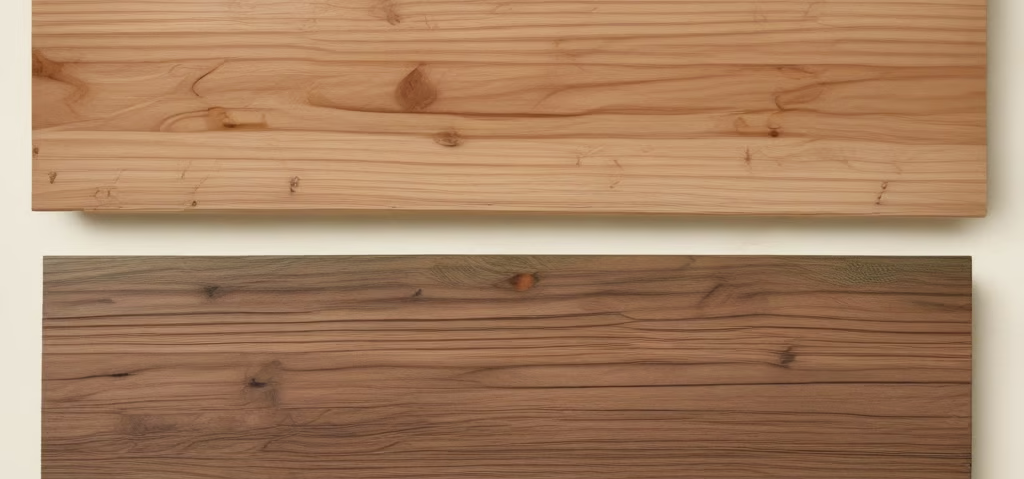
Fret woods play a crucial role in the overall performance and aesthetics of a guitar. Among guitarists, there is an ongoing debate about the differences in sound produced by various fret woods. While some musicians emphatically assert that they can hear distinct tonal differences, others staunchly defend the notion that the type of wood used has minimal impact on sound. Regardless of one’s standpoint on this debate, it is important to recognize that there is indeed a significant visual difference between the most commonly used fret woods: rosewood and maple.
Characteristics of Rosewood Fretboards
Rosewood has long been favored by players for its warm and rich tonal characteristics. Known for producing a mellow sound, rosewood provides guitarists with a rounded, full-bodied tone that many find appealing. This softness in sound makes it ideal for genres like jazz and blues, where warmth is often a desired quality. Additionally, rosewood’s visual allure cannot be overlooked; its dark, often variegated appearance lends a sense of elegance to any guitar. The unique grain patterns can vary dramatically from one piece to another, making every rosewood fretboard unique, and visually captivating to aspiring musicians.
Maple: The Bright Alternative
In contrast, maple fretboards are known for their bright, cutting tone. Guitarists who seek a more pronounced high-end frequently prefer maple, as its density leads to a snappier response when plucking strings. Maple-fretboards tend to project sound more efficiently, making them particularly suitable for players in rock and pop genres. On the visual side, maple offers a lighter, almost golden hue that brightens the aesthetic of any instrument. It has an attractive clean grain that can showcase the craftsmanship of the guitar. Some might say that the vibrant visuals combined with the sonic enhancements provide a compelling draw for guitarists who are enticed by aesthetics as much as by sound.
Personal Preference: The Deciding Factor
Ultimately, the choice between rosewood and maple comes down to personal preference. Some guitarists gravitate towards rosewood for its warm tones and striking visual appeal, while others favor the brightness and clarity offered by maple. The divergence in opinions often leads to discussions that are as heated as they are enlightening. Regardless of which side of the debate one stands on, the decision to choose one type of fret wood over the other should be based on both sound preference and visual appeal.
Interestingly, regardless of the tonal characteristics, it remains undeniable that each wood type contributes to the instrument’s personality. When selecting a guitar, players should carefully consider the impact of both sound and aesthetics. After all, a guitar is not just an instrument; it is an extension of the musician themselves, reflecting their style, preferences, and artistic identity.